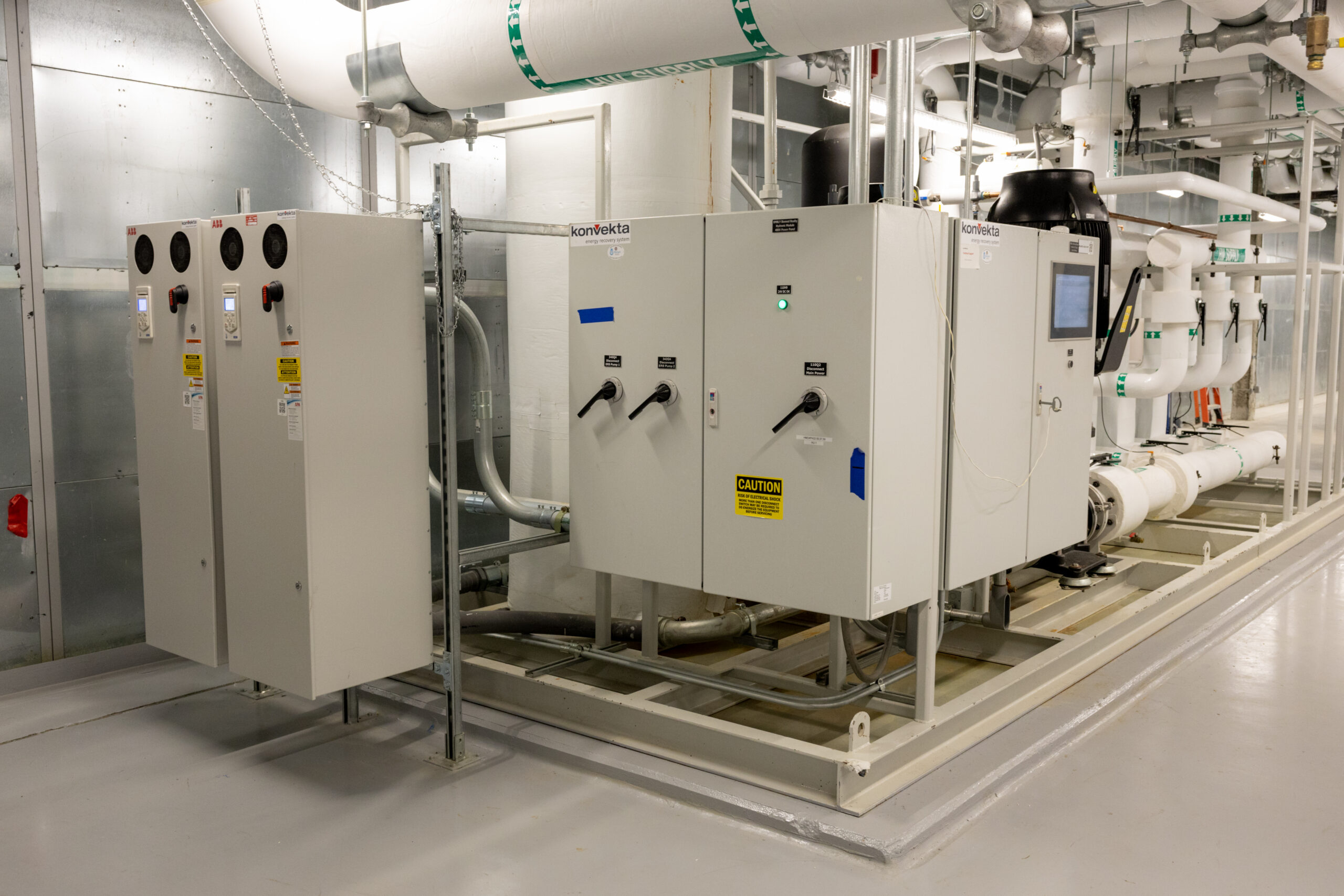
For R&D lab users, infrastructure is everything and can wreak havoc on the discovery process if not considered upfront in the planning process. Having a solid understanding of laboratory infrastructure requirements is requisite to make informed decisions about investing, property design, and protecting long-term asset value.
What Is Laboratory Infrastructure?
Laboratory infrastructure includes the physical, technical, and operational frameworks that support scientific and technological research. Broadly speaking, infrastructure falls into two categories:
- Base building systems include the core mechanical, electrical, and structural elements that a developer provides. HVAC, power distribution, plumbing, water filtration, and data connectivity are examples of base building systems.
- Tenant improvements are customizations and specialized fit-outs that individual occupiers introduce to the space. This includes elements such as enhanced data, security, access control systems, laboratory benches, casework, and storage systems, fume hoods or biosafety cabinets.
Research and development buildings for advanced technologies and life sciences are nearly always purpose-built. The demands of laboratory operations are intense and often require robust base building systems meaning comprehensively retrofitted commercial office buildings are rarely suitable for enterprise level research.
Why Laboratory Infrastructure Is Critical in Advanced Technology and Life Science Real Estate
For companies conducting complex R&D mission-critical work, , infrastructure is the primary consideration when evaluating lab spaces. Empirical research demands uninterrupted, precision-controlled instruments. A power failure, ventilation disruption, or connectivity outage isn’t just an inconvenience; such events may compromise years of work and millions of dollars in investment.
From a real estate perspective, this dynamic creates a clear value proposition: life science buildings with robust, well-maintained infrastructure attract higher-quality tenants, command stronger lease terms, and retain occupiers for longer periods. Developers and asset managers who invest in proven, resilient infrastructure create long-term value that persists across economic cycles.
Laboratory Infrastructure Checklist
When evaluating an advanced technology or life science facility, developers, investors, and prospective tenants should assess whether the building and landlord can support:
- 24/7 access to a highly qualified facilities and operations team
- High-capacity HVAC and ventilation systems
- Redundant electrical power and backup generation
- Laboratory-grade plumbing and utility connections
- Chemical and biological waste handling systems
- High-speed fiber and data connectivity
- Structural loading for laboratory equipment
- Flexible floor plates for future reconfiguration
- Scalability to accommodate future growth
Core Laboratory Infrastructure Requirements
The infrastructure demands of life science and advanced technology buildings are substantially greater than those of a standard commercial property. For developers, the scale and sophistication of these systems represent a major capital investment, but also a significant competitive advantage in attracting and retaining life science tenants.
HVAC and Ventilation Systems
Air handling is one of the most important features in a life science research facility. While a typical office may have an air change rate of 1 to 2 per hour, laboratories often require 6 to 12 (or more) air changes per hour. Many lab spaces require an HVAC system that can deliver 100% outside air, and dedicated ductwork and exhaust systems are required for fume hoods, animal facilities, and biosafety level (BSL) 2-4 spaces.
Power and Electrical Capacity
Laboratory operations are power-intensive, often drawing 15 to 25 watts per square foot of lab space, compared to 5 to 7 watts per square foot in office environments. Redundancy is crucial, and life science tenants typically require backup power systems — including uninterruptible power supplies (UPS) and emergency generators — to protect experiments and critical data from outages. Importantly, life science buildings should be designed to allow tenants to add redundant systems as their operations scale.
Plumbing and Waste Systems
In addition to the standard water supply, life science laboratories require pure water systems, including deionized and reverse osmosis systems. Plumbing systems must also be designed to account for multiple classes of utility connections, including lab-grade gas, vacuum, and compressed air.
Life science operations for example, generate chemical and biological waste and, in some cases, radioactive materials, all of which require carefully designed collection, treatment, and disposal systems. Acid neutralization systems, chemical drain networks, and autoclaves for sterilization are closely tied to environmental compliance and regulatory oversight, making waste infrastructure a critical element of responsible development.
Data and Connectivity Infrastructure
AI and modern life science research is increasingly data-driven. Genomic sequencing, computational biology, AI-assisted drug discovery, quantum computing, and connected laboratory instruments all generate and depend on large volumes of data. For technology and life science buildings, this means robust digital infrastructure is a core requirement.
High-density connectivity, fiber optic networks, and low-latency data systems are increasingly expected by sophisticated tenants. Developers who design for data infrastructure from the outset are better positioned to scale.
Specialized Infrastructure in Advanced Life Science Facilities
Beyond the core systems required for standard laboratory operations, certain segments of the life science sector demand even more specialized infrastructure. These environments represent a higher tier of real estate complexity — and a higher tier of asset value.
Laboratory Infrastructure Solutions in Modern Campuses
Infrastructure solutions like adaptable floor plates, advanced HVAC systems, and integrated digital systems are increasing the flexibility, sustainability, and advanced technological capacity of modern life science campuses.
Designing for Flexibility and Scalability
Infrastructure that allows companies to expand their laboratory space without relocating is a key driver of productivity. Designing for scalability from the outset is one of the most important investments a laboratory real estate developer can make.
Integrated Campus Infrastructure
Most modern research and discovery isn’t done in isolation. and when done right, the laboratory real estate market is making complicated collaborative research easier and more efficient. In addition to centralized utility plants and shared data infrastructure, the most modern and advanced campuses with labs include core facilities for AI integration and accelerated speed of discovery to support quantum computing and advanced electronics, robotics, photonics, microscopy, flow cytometry, genomics, and other advanced technologies that require high-end instruments and expert staff.

Challenges in Developing Lab Infrastructure
Designing adaptable, resilient laboratory infrastructure is exquisitely complex, and developers must be prepared to overcome numerous challenges to new construction. Among the most significant challenges are:
- Cost: Lab-ready construction costs can be 2 to 3 times greater per square foot than standard commercial development.
- Timelines: Procurement of specialized equipment, supply chain and vendor delays, regulatory hurdles, and shortages of specialized contractors represent common timeline delays.
- Zoning: Local restrictions on land use must be navigated, and outdated zoning classifications can create unexpected delays.
Retrofitting existing buildings to meet laboratory infrastructure requirements presents its own challenges. Older structures often lack the structural capacity necessary to support lab operations, and the cost of remediation can be prohibitive.
Sustainability in Laboratory Infrastructure
Sustainability is increasingly central to laboratory infrastructure development. Life science, quantum and advanced technology buildings are among the most energy-intensive asset types in commercial real estate — a challenge that developers and operators across the sector are working to address.
Sustainability considerations are also increasingly important to institutional investors and sophisticated tenants. Many companies are setting ambitious sustainability targets of their own, and the buildings they occupy are part of that equation. Developers who integrate sustainability into their infrastructure planning are creating assets that align with the values of their tenants.
The Role of Laboratory Real Estate Developers
The most effective laboratory real estate developers anticipate infrastructure needs and build for long-term flexibility. They understand that acompany signing a lease today may need GMP capabilities in a few years, or that an AI or computational biology lab is likely to outgrow its current data storage capacity and will have increased power needs in the future.
BioMed Realty has spent more than 20 years developing and operating mission-critical real estate for the life science, technology, and innovation industries. BioMed Realty brings the experience, scale, financial backing, and in-house expertise to design infrastructure that performs under pressure. Backed by Blackstone, BioMed Realty’s portfolio is built for long-term stability, enabling tenants to focus on discovery while their environments operate without interruption.
Future Trends in Laboratory Infrastructure
Modern laboratory design continues to evolve, but some notable trends are shaping how developers are planning for the future:
- Automation and robotics are becoming standard features of advanced laboratory environments, requiring infrastructure that supports high-load robotic systems, precision environmental controls, and integrated data networks.
- Smart building technologies are transforming how laboratory infrastructure is managed. Real-time sensors, predictive maintenance systems, and AI-driven building management platforms improve reliability, reduce operating costs, and support sustainability goals.
- Infrastructure failures can be catastrophic for life science researchers. Developers are mitigating this risk by increasing redundancy, resilience, and adaptability in their base building systems.
Conclusion: Infrastructure as a Strategic Advantage
Laboratory infrastructure is not simply a technical requirement — it is a strategic differentiator in life science real estate. Facilities with purpose-built, high-performance infrastructure attract stronger tenants, support longer occupancies, and generate more durable returns.
BioMed Realty is dedicated to enabling innovative research and development environments. With a portfolio engineered for reliability, a development team that thinks decades ahead, and a commitment to the kind of trusted partnership that enables breakthrough science, BioMed Realty provides the infrastructure foundation that life science and technology innovation requires.